
Water is one of those things most people don’t think about until something goes wrong. We turn on the tap, fill a glass, run the shower, and expect everything to work as it should. But the quality of household water can affect much more than taste. It can influence plumbing, appliances, skin, laundry, and the overall comfort of a home.
That’s why more homeowners are looking beyond temporary fixes and considering professional water treatment solutions. Whether the concern is mineral buildup, unpleasant odors, or uncertainty about what’s in the water, the right system can make a noticeable difference. Still, choosing one shouldn’t be about buying the most expensive equipment. It should begin with understanding the water itself.
What Makes Household Water a Concern?
Not all water problems look the same. In some homes, the main issue is hard water, which contains elevated levels of minerals such as calcium and magnesium. These minerals aren’t necessarily dangerous, but they can create everyday frustrations.
You may notice white spots on faucets, soap that doesn’t lather well, stiff laundry, or scale collecting inside a water heater. Over time, mineral deposits can also affect fixtures and appliances. A problem that starts as a little inconvenience can become an expensive maintenance issue if it’s ignored.
Other households may be concerned about chlorine taste, sediment, iron staining, or contaminants that aren’t visible at all. Clear water isn’t automatically proof that water quality is ideal. Different concerns call for different treatment methods, which is why testing matters before making a decision.
Understanding the Benefits of Soft Water
For homes dealing with mineral buildup, soft water can make daily routines feel considerably easier. A water softener works by reducing calcium and magnesium through a process commonly known as ion exchange. The result is water that is less likely to leave scale behind on plumbing fixtures and appliances.
The benefits can show up in surprisingly ordinary ways. Soap and shampoo may rinse more effectively, glassware can have fewer mineral spots, and laundry may feel less rough. Water heaters and other equipment may also benefit from reduced scale accumulation, potentially helping them operate more efficiently over time.
However, a softener isn’t a universal answer to every water concern. It doesn’t automatically remove every contaminant, and it may not be the right solution for a home whose primary issue is bacteria, PFAS, or another specific substance. A professional assessment helps determine whether softening, filtration, or a combination of systems makes sense.
Why Water Testing Should Come First
It’s tempting to start shopping based on a neighbor’s recommendation or an online product review. But two homes in the same town can have different water concerns, depending on the source, plumbing, and treatment already in place.
A free water test can be a practical first step for homeowners who want a clearer picture before spending money. Depending on the provider and the test being offered, it may help identify hardness, pH, iron, chlorine, or other basic water-quality indicators. Some tests are more comprehensive than others, so it’s worth asking what is actually included.
A good water professional should explain the results in plain language rather than using confusing numbers to push a product. Ask which issues are present, which ones require treatment, and whether the recommended equipment directly addresses those concerns. Testing should inform the decision—not simply serve as a sales pitch.
Choosing Between Filtration and Softening
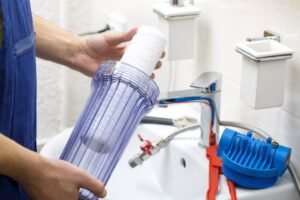
Water softeners and filtration systems serve different purposes. A softener is primarily designed to address hardness minerals, while a filter may target sediment, chlorine, odors, or particular contaminants, depending on its technology.
Whole-home filtration is often considered when homeowners want treated water throughout the house. This can be useful for showers, laundry, cooking, and other daily activities. In contrast, reverse osmosis systems are commonly installed at a specific drinking-water tap to provide more refined treatment for drinking and food preparation.
There isn’t one system that fits every household. The best setup depends on water quality, household size, usage, budget, and the level of treatment required. A professional can help explain whether one solution is enough or whether multiple stages are necessary.
Look Beyond the Equipment Price
Price is important, but the initial purchase cost is only part of the picture. Homeowners should also consider installation, filter or salt replacement, maintenance, electricity or water usage, and the expected service life of the equipment.
This is where great warranties can offer meaningful reassurance. A strong warranty may help protect against certain equipment defects and show that the manufacturer stands behind its product. Still, warranty terms vary widely. Some cover parts but not labor, while others have exclusions, registration requirements, or limited coverage periods.
Before signing anything, ask what the warranty includes, how service claims are handled, and whether maintenance is required to keep coverage active. A lower-priced system with unclear support may not be the bargain it first appears to be. Reliable after-sales service can matter just as much as the equipment itself.
Professional Installation Makes a Difference
Even a high-quality water treatment system may perform poorly if it’s installed incorrectly. Sizing, water pressure, drainage, plumbing connections, and available space all need to be considered. Improper installation can lead to leaks, inefficient operation, or unnecessary repairs.
A qualified installer should inspect the home’s plumbing and explain how the system will fit into the existing setup. They should also provide clear instructions for maintenance and let homeowners know what to expect during normal operation.
It’s worth asking whether the company offers follow-up service. Water treatment isn’t always a one-and-done purchase. Filters need changing, softeners may need salt, and equipment occasionally requires adjustment. Having a dependable service team can make ownership much less stressful.
Questions to Ask Before Making a Decision
Before choosing a water treatment provider, take a few minutes to ask practical questions:
- What specific water problems does the recommended system address?
- What does the water test measure?
- Is the system sized for the home’s water usage?
- What are the ongoing maintenance and replacement costs?
- How long does installation usually take?
- What does the warranty cover?
- Is repair and service support available locally?
- Are there less expensive alternatives that would solve the same problem?
A trustworthy company should be comfortable answering these questions. Be cautious of anyone who makes dramatic promises without testing the water or explaining the technology behind the recommendation.
A Small Upgrade That Can Support Long-Term Comfort
Water treatment isn’t always the most exciting home improvement project. It doesn’t change the look of a kitchen or create an extra room. Yet it can quietly improve many parts of everyday life, from cleaner fixtures to better-tasting drinking water and fewer plumbing headaches.
The key is to approach the decision thoughtfully. Start with a water test, identify the actual problem, compare treatment options, and understand the long-term costs. Whether the answer is a softener, whole-home filter, reverse osmosis system, or no new equipment at all, the goal should be straig