

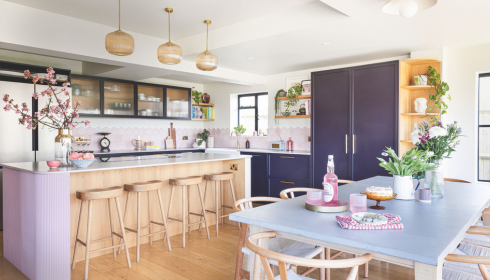
There’s a quiet difference between a house that looks good and a home that feels right.
At first glance, they can seem the same. Clean lines, stylish furniture, maybe a trendy color palette. But spend a little time in each, and you’ll notice it—the subtle ease of movement, the comfort of well-placed elements, the way everything just flows.
That second kind of space doesn’t happen by accident.
It’s designed, yes—but not in a rigid, overly planned way. More like it’s shaped with intention, with real life in mind.
The Heart of the Home: More Than Just Function
If there’s one place where design truly shows its impact, it’s in the areas we use the most.
Kitchens and bathrooms, especially.
They’re not just rooms—they’re routines. Morning coffee, late-night snacks, rushed mornings, slow weekends.
That’s why kitchen and bathroom design goes beyond choosing tiles or fixtures. It’s about understanding how these spaces are actually used, day in and day out.
Where do you prep food? How do you move between tasks? Is everything within reach, or does it feel like a constant stretch?
When these spaces are designed thoughtfully, they don’t just look good—they make your life easier in ways you don’t always notice at first.
The Invisible Art of Flow
Some of the best design decisions are the ones you don’t consciously see.
You just feel them.
That’s the beauty of space planning. It’s not flashy or obvious, but it quietly shapes how a home works.
A well-planned layout allows you to move naturally, without obstacles or awkward transitions. Rooms feel connected, not disconnected. There’s a sense of balance, even if you can’t quite explain why.
And when that flow is missing, you feel it just as strongly—tight corners, wasted space, furniture that never seems to fit quite right.
Good planning fixes that before it becomes a problem.
Choosing Pieces That Actually Belong
Let’s talk about furniture for a moment.
It’s easy to fall into the trap of buying things that look great on their own. A beautiful chair, a stylish table, a statement piece that catches your eye.
But when you bring them all together, something feels… off.
That’s because design isn’t about individual pieces—it’s about how they work together.
Thoughtfully selected home furnishings create a sense of cohesion. They complement each other, both visually and functionally. Nothing feels out of place.
And more importantly, everything serves a purpose.
It’s not just about filling a room. It’s about completing it.
Living With Your Space, Not Against It
We’ve all experienced it—a layout that just doesn’t cooperate.
You bump into furniture. You struggle to find storage. You rearrange things again and again, hoping it will finally feel right.
It’s frustrating, but it’s also common.
The thing is, a well-designed space should work with you, not against you.
It should adapt to your habits, your routines, your lifestyle. Not the other way around.
When that alignment happens, everything feels smoother. Easier. More natural.
And suddenly, your home feels less like something you manage and more like something that supports you.
The Role of Light, Texture, and Mood
Design isn’t just about structure—it’s about atmosphere.
The way light enters a room. The textures you interact with. The subtle shifts in color throughout the day.
These elements shape how a space feels just as much as its layout.
A room with soft lighting and layered textures might feel calm and inviting. A brighter, more open space might feel energizing.
There’s no right or wrong—it depends on what you want your home to feel like.
And when those elements are aligned with your preferences, the result is a space that resonates on a deeper level.
Small Adjustments, Big Changes
One of the most encouraging things about design is that it doesn’t always require a complete overhaul.
Sometimes, small adjustments can make a huge difference.
Repositioning furniture to improve flow. Updating lighting to change the mood. Swapping out a few key pieces to bring everything together.
These changes might seem minor, but they can transform how a space feels.
It’s a reminder that design is flexible. It evolves. It grows with you.
Letting Go of the Idea of Perfection
There’s a tendency to chase perfection in design.
Perfect symmetry. Perfect coordination. Perfect execution.
But real homes aren’t perfect.
They’re lived in. They have character. They reflect the people who inhabit them.
Sometimes, the most beautiful spaces are the ones that embrace a bit of imperfection—a mix of styles, a few unexpected choices, things that tell a story.
And that’s what makes them feel authentic.
When Everything Falls Into Place
There’s a moment, often subtle, when a space finally feels complete.
You walk into a room, and there’s nothing you want to change. No adjustments to make, no missing pieces.
It just feels right.
Not because it’s perfect, but because it works—for you.
And that’s the goal.
Coming Back to What Really Matters
At the end of the day, design isn’t about impressing anyone.
It’s about creating a space where you can live comfortably, move freely, and feel at ease.
A place that supports your routines, reflects your personality, and adapts as your life changes.
When your home does that—when it feels natural, functional, and genuinely yours—that’s when design stops being something you think about.
It simply becomes part of your everyday life.
Quietly doing its job, in all the ways that matter most.