

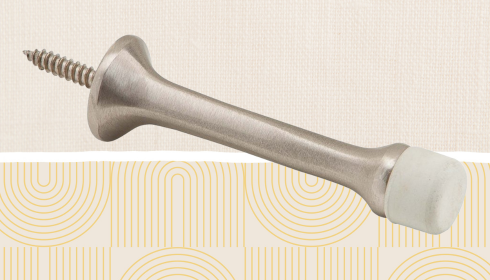
In tight rooms, doors often swing straight into walls, cabinets or furniture edges. Over time, you see dents in the plaster, chipped paint on doors, or marks on the side of a cupboard that’s taking every hit. It looks messy and can damage both the door and whatever it’s hitting.
A simple door stopper—either the small rubber one on the floor, the kind that fits on the hinge, or the soft bumper stuck to the wall—acts like a cushion. It stops the door from slamming full force into anything. Even if someone opens it quickly, the impact is softened.
This tiny detail extends the life of your paintwork, skirting boards and furniture corners. It also reduces that annoying “bang” sound you hear every time someone enters. In narrow corridors or behind sofas placed close to doors, a stopper can be the difference between a neat corner and a permanently damaged wall.
It’s a cheap, often ignored accessory that quietly saves your finishes day after day.