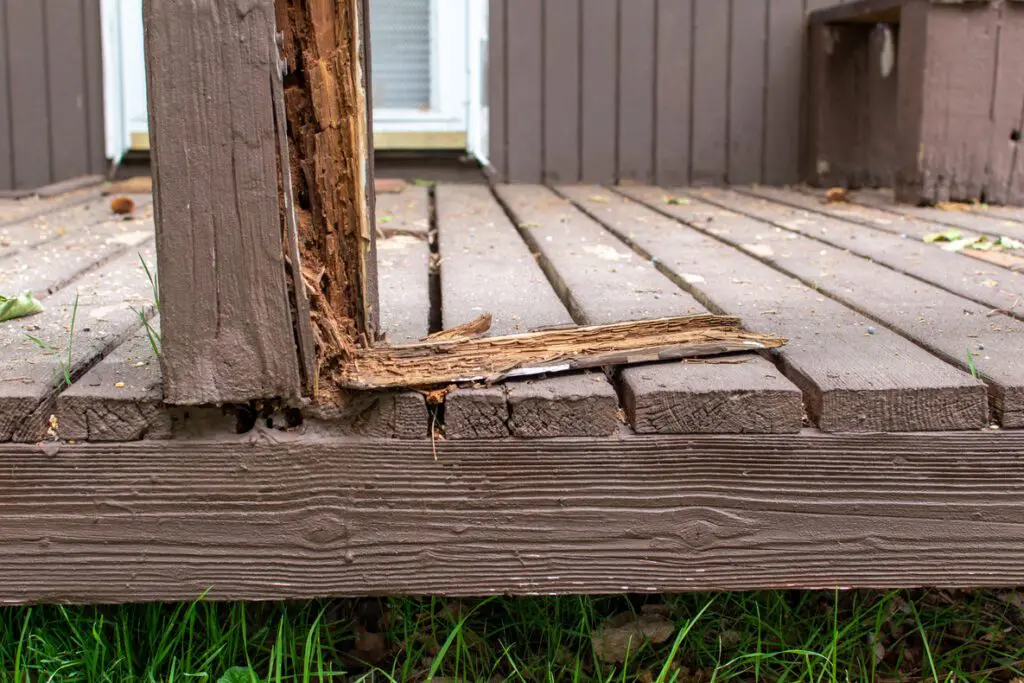
Picture two neighbors in Marysville who bought nearly identical homes built by the same developer in the same year. Both houses feature similar layouts, cedar trim, covered entryways, and backyard decks. Years later, one homeowner notices only minor cosmetic wear, while the other discovers soft window trim, deteriorating fascia boards, and moisture-damaged deck posts that require extensive repairs.
The surprising part is that age is not the deciding factor. Many homeowners assume that houses built at the same time should age the same way. In reality, every property has a different history of moisture exposure, drainage, ventilation, repairs, and maintenance.
A home’s age tells only part of the story. Understanding what caused the deterioration is essential when determining the right approach to wood rot repair in Marysville. It becomes essential when visible damage may be connected to a larger moisture problem hidden behind exterior surfaces.
What Actually Causes Wood Rot?
Wood rot does not happen simply because wood gets old. The primary problem is prolonged moisture exposure that creates conditions where wood-decaying fungi can grow.
When exterior wood repeatedly becomes wet but cannot dry properly, its moisture content can remain elevated for extended periods. Fungi can then begin breaking down the wood’s structure. As deterioration progresses, the affected material can become soft, brittle, discolored, or crumbly.
The process often follows a pattern:
- Water reaches the wood through rain, leaks, condensation, poor drainage, or failed seals.
- The wood remains damp because airflow, sunlight, or drainage is insufficient.
- Fungal growth develops when moisture conditions remain favorable.
- The wood fibers deteriorate, gradually reducing the material’s strength.
- Visible damage appears, sometimes long after the moisture problem began.
This explains why two homes of the same age can have completely different levels of deterioration. The important question is not simply how old the wood is, but how often it becomes wet, how quickly it dries, and whether moisture has been allowed to enter hidden areas.
Why Home Age Does Not Tell the Whole Story
Two houses can experience the same number of winters while being exposed to very different moisture conditions.
One property may have well-maintained gutters, clear drainage paths, properly sealed windows, and good airflow around exterior walls. Another may have overflowing gutters, dense vegetation, cracked caulking, and areas where water repeatedly collects.
These differences can influence how long exterior wood stays damp after rainfall.
Other factors that can affect wood deterioration include:
- Roof and gutter drainage
- Landscaping around exterior walls
- Sunlight exposure
- Air circulation
- Window and door sealing
- Deck construction
- Previous repairs
- Exterior paint and caulking condition
This is why evaluating wood rot requires more than looking at the age of the property.
Rainwater Can Reach the Same-Age Homes in Very Different Ways
Marysville’s wet climate means exterior wood regularly encounters rainfall. However, rainfall itself is not necessarily the problem. The bigger concern is where the water goes and whether affected materials can dry afterward.
Consider the roof edge of two neighboring homes.
On one property, gutters collect runoff and downspouts direct it safely away from the structure. On the other, a clogged gutter may overflow against the fascia during heavy rain. If that water repeatedly reaches joints, trim, or exposed end grain, the same area may remain vulnerable season after season.
Similar problems can develop around:
- Window trim and sill areas
- Door frames
- Fascia and soffits
- Exterior siding
- Porch columns
- Deck framing
- Areas around roof penetrations
Water can also enter through small openings that are difficult to notice from ground level. Once moisture gets behind an exterior surface, the visible portion of the wood may not accurately represent what is happening underneath.
Landscaping Can Keep Exterior Wood Wet for Longer
Landscaping can affect wood performance in ways homeowners may not immediately notice.
Shrubs and climbing plants positioned directly against siding can restrict airflow and slow evaporation. Dense vegetation can also make it harder to identify damaged caulking, siding gaps, or deteriorating trim.
Irrigation is another potential source of repeated moisture. A sprinkler head aimed toward a wall, window, or deck can repeatedly wet the same section of wood even when there is no plumbing leak.
Grading matters as well. If soil or landscaping directs water toward the house instead of away from it, lower sections of the structure may receive more moisture than intended.
The issue is not that landscaping automatically causes wood rot. It is that certain landscaping conditions can make it harder for exterior materials to dry.
Sunlight and Airflow Help Wood Dry After Rain
Not every part of a home receives the same amount of sunlight or airflow.
A south- or west-facing wall may dry relatively quickly after rainfall, while an exterior wall shaded by mature trees may stay damp considerably longer. Homes surrounded by dense vegetation can also have less air movement around siding, trim, and decks.
This matters because wood that repeatedly gets wet and dries quickly is exposed to different conditions than wood that remains damp for extended periods.
Look closely at shaded areas around:
- Window and door trim
- Deck railings and framing
- Exterior corners
- Fascia boards
- Porch structures
- Lower siding
Differences in drying conditions can help explain why one side of a home may show deterioration while another side appears relatively unaffected.
Small Maintenance Problems Can Create Larger Moisture Pathways
Wood rot often develops through a series of small problems rather than one dramatic event.
A cracked section of exterior caulking may allow water behind a trim board. A deteriorated piece of flashing may redirect runoff into an assembly that was designed to stay dry. A damaged gutter may repeatedly wet fascia. Peeling paint may expose vulnerable wood to repeated weather exposure.
Each issue can seem minor when viewed separately.
The concern is what happens when the same area experiences repeated moisture exposure over months or years.
For example, simply repainting deteriorated trim may improve its appearance, but if water is entering behind the trim, the underlying moisture problem remains. Similarly, replacing a section of fascia without correcting the gutter issue can leave the new material exposed to the same conditions.
Effective maintenance therefore involves identifying where moisture is coming from and why it is reaching the wood.
Previous Repairs Can Influence Future Wood Rot
A home’s repair history can also explain why two similar properties age differently.
Suppose a homeowner replaces damaged window trim but does not address a flashing problem above the window. The new trim may look perfectly finished when the repair is complete. However, if rainwater continues entering behind the assembly, the same area can eventually deteriorate again.
The same principle applies to decks, fascia, siding, and exterior doors.
When investigating wood deterioration, it is useful to determine:
- What material was previously replaced?
- Why was it replaced?
- Was the moisture source corrected?
- Were surrounding materials inspected?
- Has the area experienced repeated water exposure?
Understanding the repair history can help identify recurring moisture problems instead of treating each damaged board as an isolated issue.
Construction Details Can Affect How a Home Handles Moisture
Even houses built by the same developer during the same year can have differences in construction details.
Small variations in flashing, window installation, roof overhangs, drainage, ventilation, or deck connections can influence how water moves through and around the structure.
For example, a properly installed roof overhang can help protect certain exterior surfaces from direct rainfall. Proper flashing can help redirect water away from vulnerable joints. Adequate drainage can prevent water from remaining against lower portions of the structure.
These components work together as part of the home’s exterior moisture-management system.
When one part does not perform as intended, nearby wood may receive more moisture than it was designed to handle.
Why Wood Rot Can Spread Beyond What You Can See
One of the more concerning aspects of wood rot is that visible damage does not always show the full extent of the problem.
A homeowner may notice a small soft spot on a window sill or a section of deteriorated trim. However, moisture may have entered behind the visible surface and affected adjacent materials.
For this reason, simply replacing the visibly damaged section may not always address the complete problem.
An experienced handyman in Marysville can examine surrounding areas for signs that moisture has traveled beyond the obvious damage. Depending on the location, that may include checking adjacent trim, framing, siding, deck components, or areas around windows and doors.
The goal is to determine whether the damage is isolated or connected to a larger moisture issue.
What a Professional Looks for During a Wood Rot Assessment
A proper assessment should focus on both the damaged material and the conditions that allowed the deterioration to develop.
An experienced professional may evaluate:
- Gutter and downspout performance
- Roof runoff patterns
- Window and door areas
- Exterior caulking
- Flashing conditions
- Fascia and soffits
- Deck framing and connections
- Siding and trim
- Drainage around the structure
- Landscaping near exterior walls
- Evidence of previous repairs
This broader evaluation can help determine whether the property needs localized wood replacement, moisture-related corrections, or both.
For homeowners dealing with deteriorated trim, fascia, siding, decks, or other exterior wood, understanding the source of the damage is an important part of planning appropriate wood rot repair in Marysville.
Every Home Has Its Own Moisture History
Two homes built on the same street during the same year rarely have identical maintenance histories.
One homeowner may have kept gutters clear, maintained exterior caulking, trimmed vegetation away from siding, and addressed drainage problems as they appeared.
Another may have unknowingly allowed water to collect near the home or remain trapped around exterior components for years.
Over time, these differences can produce dramatically different results.
That is why a home’s construction date should not be treated as a reliable indicator of its current wood condition. The more important question is how the property has handled moisture throughout its lifetime.
Address Wood Damage Before the Cause Gets Overlooked
Wood rot is rarely just an age-related problem. It develops when moisture reaches vulnerable wood and remains there long enough to create conditions for deterioration. Differences in drainage, airflow, landscaping, construction details, and previous repairs can therefore cause two similar homes to experience very different levels of damage.
If you have noticed soft trim, deteriorating fascia, peeling paint, damaged deck components, or other signs of moisture exposure, having the affected areas evaluated can help determine what is happening beneath the surface. Professional wood rot repair in Marysville can address deteriorated materials while also identifying the moisture conditions that contributed to the problem.